Data centers use a lot of water, and most of it goes to one job: getting heat out of the building. The usual way is a cooling tower, which works like a giant evaporative cooler and loses water to the air all day. As more data centers get built, water has become a permitting problem and a community problem as much as a cost line.
So we were glad to see The Register's report on a Schneider Electric white paper about running coolant hotter. Schneider modeled four large data center designs, in Paris and Dallas, from air cooling through to liquid cooling. In their model, switching from air to liquid cooling with coolant at 45 C (113 F) cut water use by at least half. The reason is simple: warmer coolant means more hours of the year when outside air alone can carry the heat away, through a dry cooler that works like a car radiator and evaporates nothing. Schneider says cooling towers use 5 to 20 times more water than dry coolers for the same size of facility. The paper is a vendor's, so the figures are Schneider's, but the direction matches what we see.
Warm water has a second value. Heat at that temperature is useful to a nearby district heating network instead of being thrown away. The Open Compute Project gave us its Sustainability Award in 2025 for advancing sustainable data center cooling, so we have a stake in this.
We agree with the direction. Our question is where the 45 C is measured.
Two heat exchangers stand between the water and the chip
Every chip has a temperature limit set by its maker. Between that chip and the building's water sit at least two heat exchangers: the cold plate bolted to the chip, and the exchanger inside the coolant distribution unit, the cabinet that pumps coolant out to the racks. Each one needs a temperature gap to move heat, the way a hot pan needs to be hotter than the water you drop it in. Engineers call that gap the approach.
Every degree of gap in those exchangers is a degree the building's water can't have. If the exchanger in the distribution unit needs a wide gap to move full load, the operator has to run the building's water cooler to hold the chip at its limit, and gives back part of Schneider's water saving. The article doesn't give a gap, and neither do most spec sheets.
Where we come in
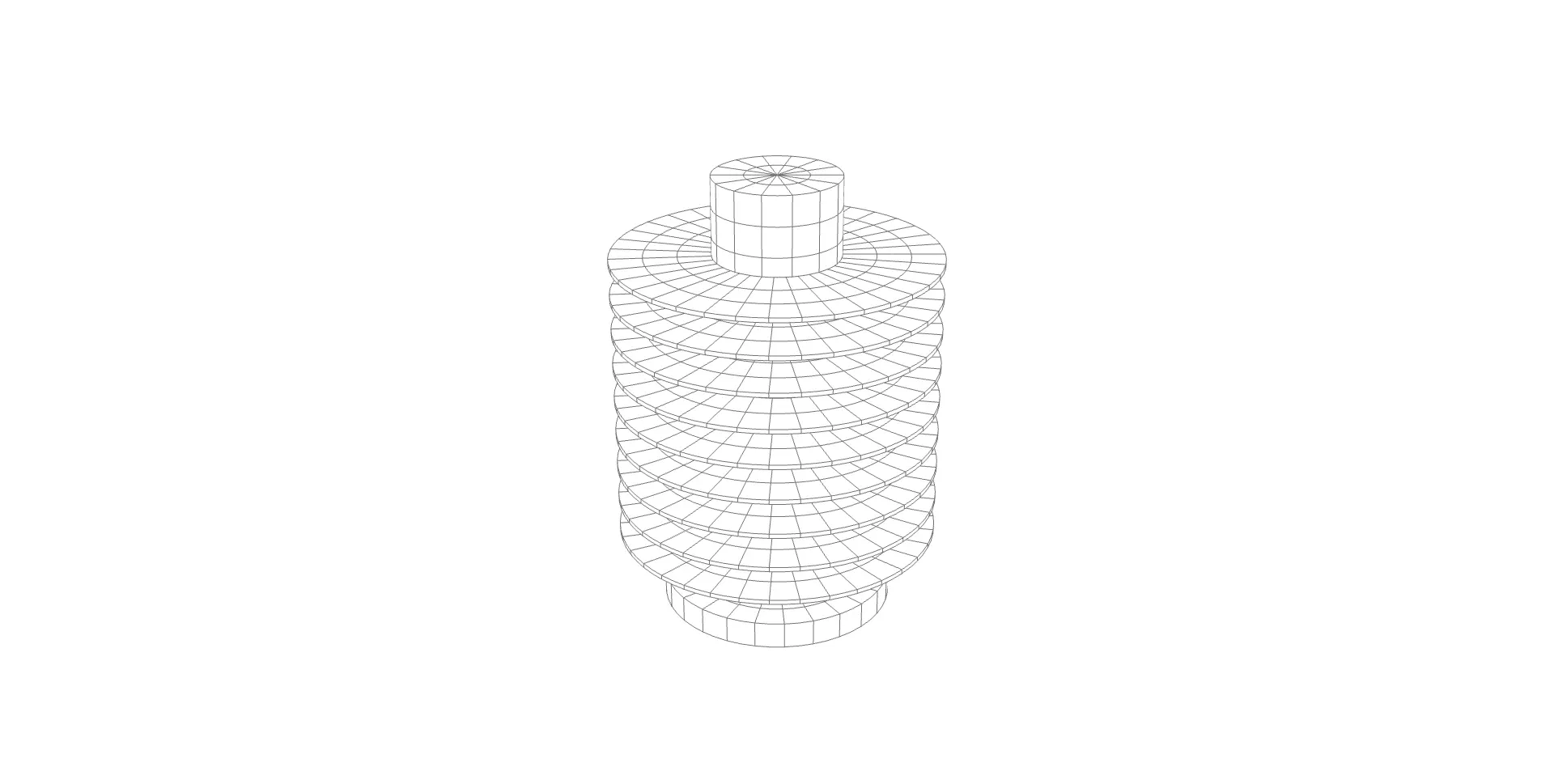
A narrow gap at full load takes more heat transfer surface, or better surface, inside the exchanger. Conventional units are built from stamped metal plates, which caps how much surface fits in the box. We 3D print ours, so the internal channels are shaped for heat transfer and easy flow together. Our 1 MW heat exchanger, built for the Open Compute Project's Deschutes cooling design, is one example. Printing fits more of that surface into the same box than stamped plates allow.
What operators should ask for
When a design promises a coolant temperature, ask what gap the distribution unit's heat exchanger needs at full load to deliver it. That number decides how much of the water saving reaches the meter, and we hold our own exchanger to the same question.