Heat Exchangers
Approach temperature, pressure drop, or dimensions. The geometry gets generated around your priorities.
Your bottleneck becomes your advantage
Every CDU on the market has the same commodity core inside it. Yours does not have to.
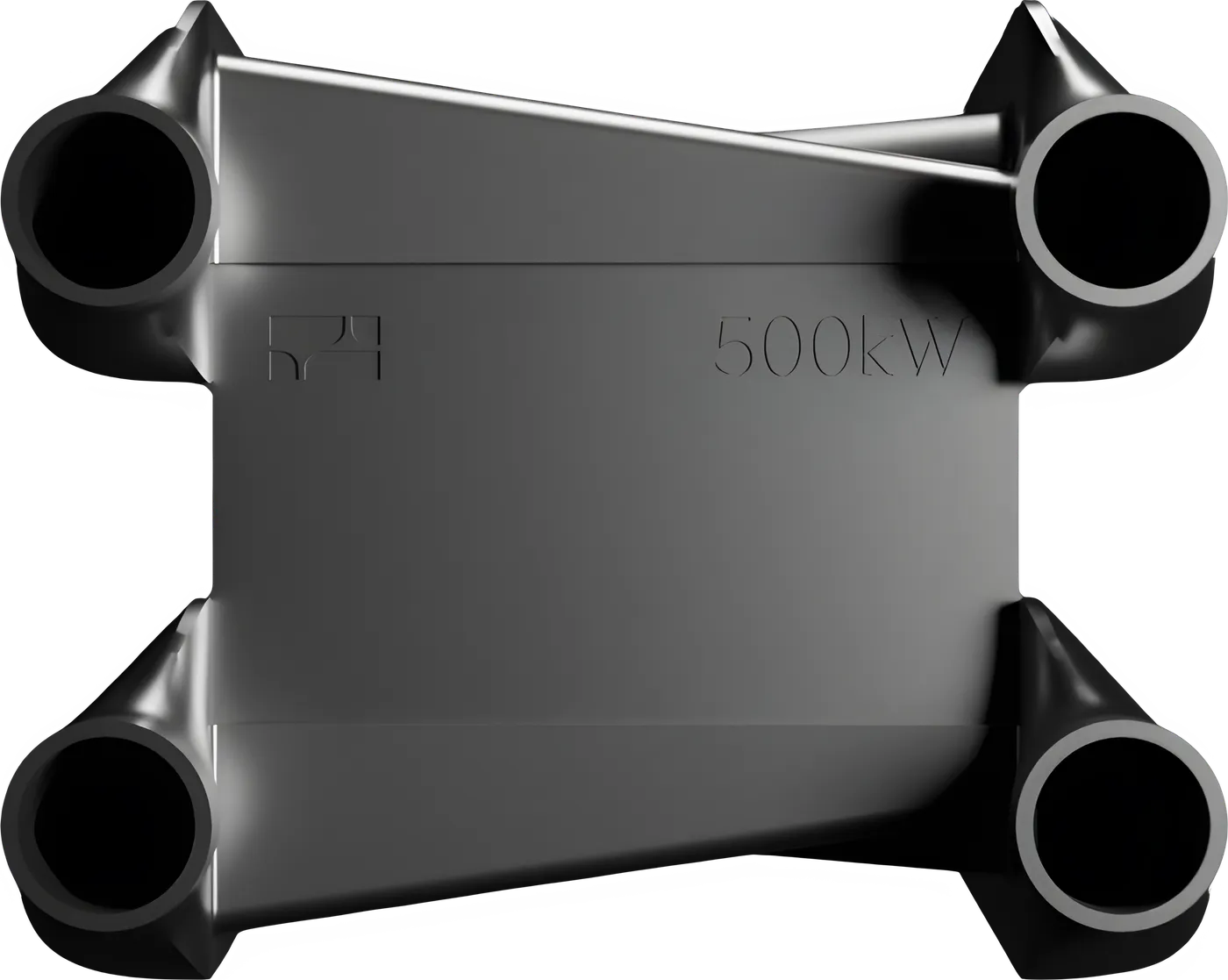
Liquid-to-Liquid CDU
Links facility water to the IT loop. Isolates contamination, controls flow, and holds rack-inlet temperatures steady as loads swing. This is the component that sets how much heat a CDU can reject, and today it is a brazed plate exchanger in every unit on the market.
Two-Phase
Condenses refrigerant in pumped two-phase loops, and evaporates refrigerant against the chip cold plate. Built for the high heat-flux densities where single-phase liquid begins to run out of headroom. Low-GWP A2L compatible.
Air-to-Liquid
Rear-door and row cooling for IT racks. Captures exhaust at the source, with no hot-aisle containment or major airflow rework required.
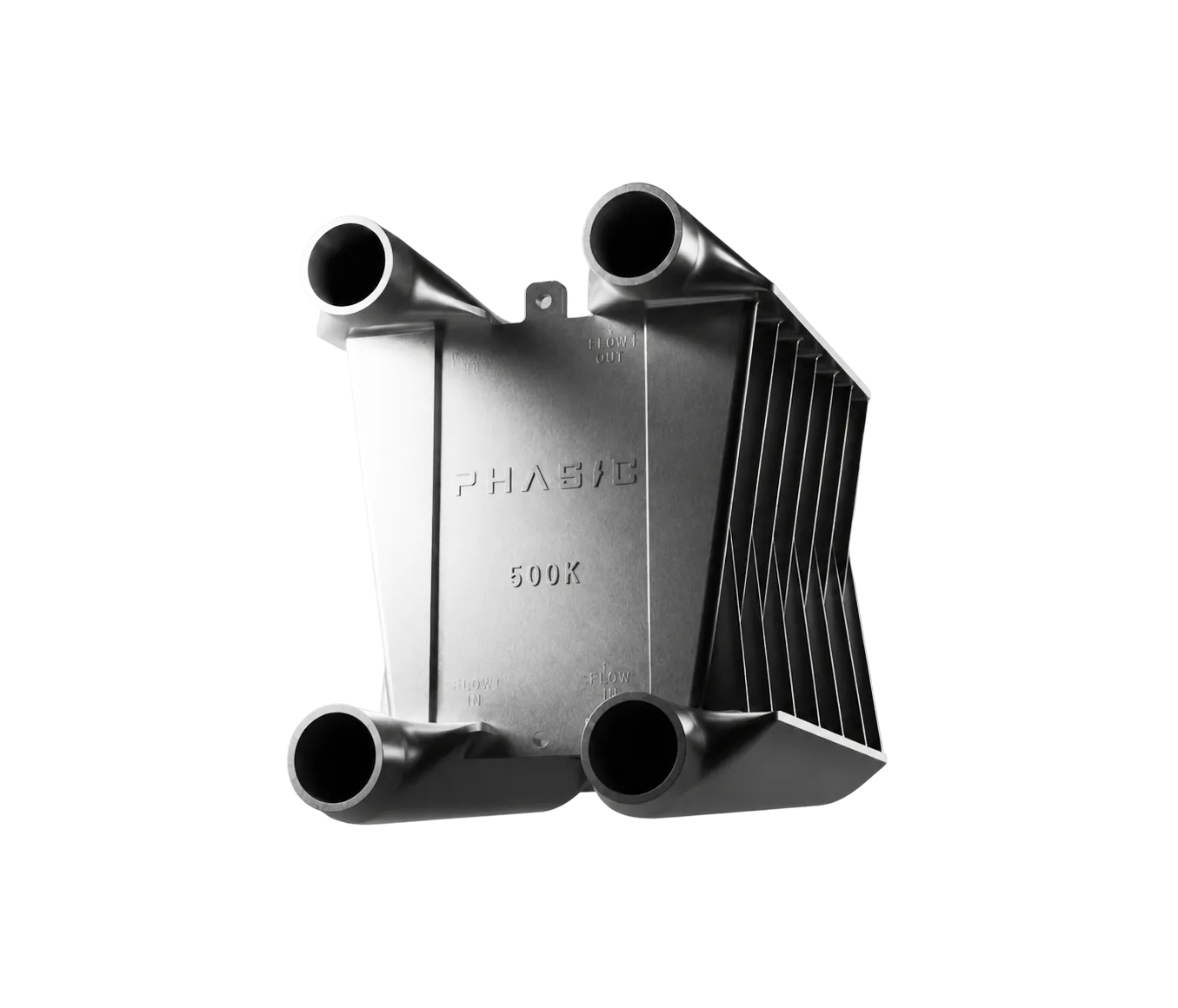
Why we don’t publish a model list
Every customer arrives with a different heating duty, different fluids, and a different envelope to fit into. A catalog forces you to design around whatever happens to exist, and then absorb the gap between what you needed and what you could buy.
We do not have that constraint. Flux generates the geometry for a specific duty point, and additive manufacturing builds it without tooling, so there is no production reason to make you compromise. There is also nothing on the outside of a unit that tells you its rating. The difference is entirely internal.
Same platform underneath all three formats
The formats differ in what fluids they handle and how they sit in your loop. Everything below is common to all of them.
Printed as a single piece
No plates, no brazing, no gaskets, no assembly, and no brazed joints to fail.
Independent geometry per fluid side
The hot and cold sides are tuned separately. Stamped plates share one shape on both sides and physically cannot do this.
Channels at 0.43 mm
Ten to fifty times finer than the corrugation a press can stamp, which is where the heat transfer gain comes from.
Thermal effectiveness at or above 0.8
The industry works at roughly 0.6.
Designed to your conditions
Duty, fluids, temperatures, pressures, and envelope are inputs, not constraints you work around.
Qualified materials and fluids
SS316 stainless and AA3003 aluminum. Water, glycol, dielectric coolants, and low-GWP A2L refrigerants.
Optimize for your needs across three dimensions
Approach Temperature
Close the gap between your two loops. More surface inside the same envelope, so the coolant leaves colder and the chiller runs less.
Footprint
The same duty, in a fraction of the volume. Shrink the cabinet, or keep it and spend the freed litres on more core.
Pressure Drop
You set the ceiling. We design underneath it. Give us the maximum your pump can carry and the geometry is built to the highest performance that fits under it.
Same duty. You choose what to do with the headroom.
~30%
lower approach temperature, in the same envelope
~60%
less core volume, at the same duty and approach temperature
0
brazed joints
Tell us which one matters on your loop and the geometry is generated for it. A stamped plate cannot offer the choice.
Both percentages are measured against a conventional brazed plate at equal duty. Approach temperature at equal envelope; core volume at equal approach temperature, 53 liters against roughly 134, on our independently tested 500 kW flagship.