Approach
Approach temperature, pressure drop, or dimensions. The geometry gets generated around your priorities.
Two capabilities.
Nobody else
has both.
Flux designs heat exchanger geometry no engineer can draw by hand. Large-format additive machines build it as a single piece of metal. Neither half is the product. The combination is.
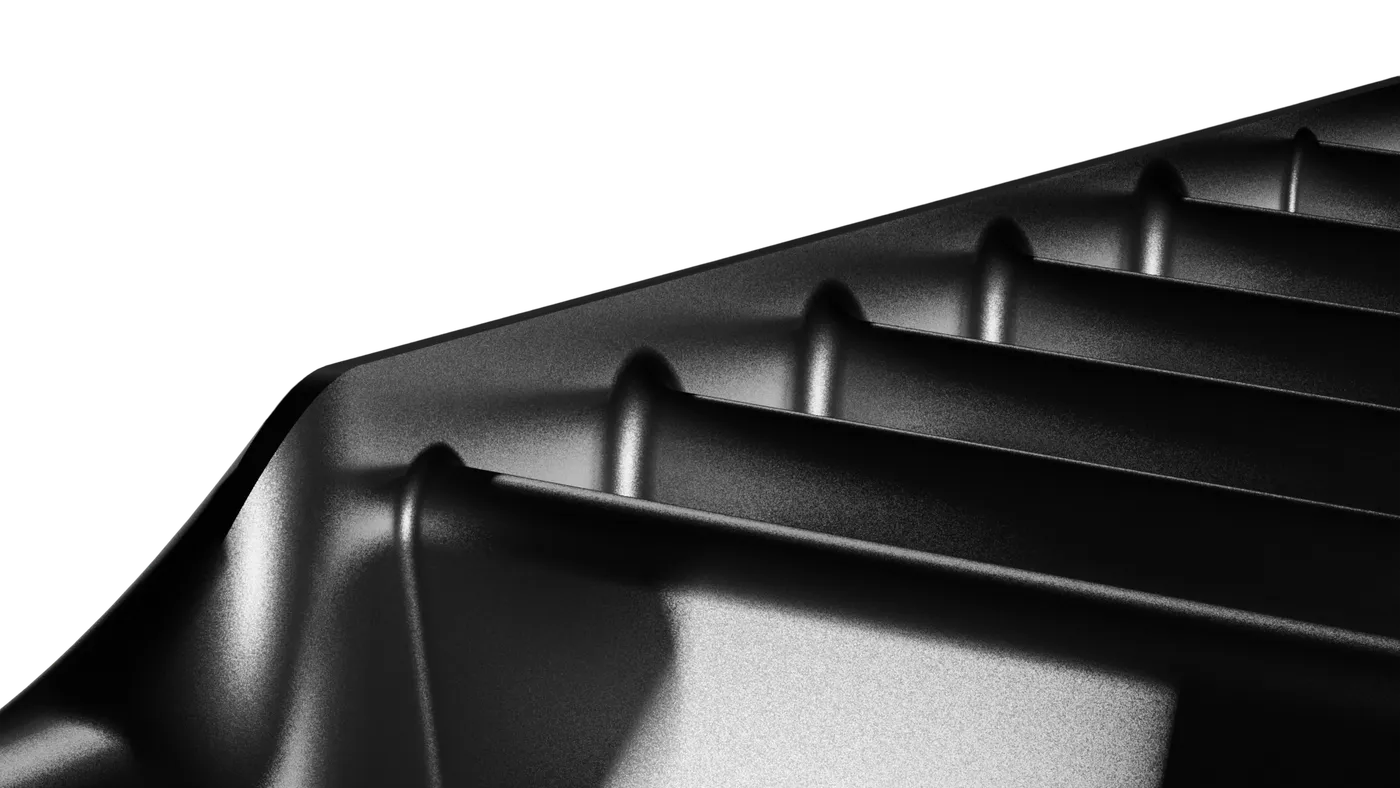
Geometry is where performance lives.
Flux designs what cannot be stamped.
Shaped for whichever constraint matters most to you: volume, approach temperature, or pumping cost. Give Flux a duty point and it returns production-ready CAD in about a minute.
Minutes, not months.
Shaped for whichever constraint matters most to you: volume, approach temperature, or pumping cost.
Known before it's built.
Outlet temperatures predicted to within half a degree of simulation.
One platform, three architectures.
Liquid-to-liquid, two-phase and air-to-liquid all come out of the same models.
How it works
We print what cannot be assembled.
Powder in, finished core out, with no die, no braze and nothing to leak.
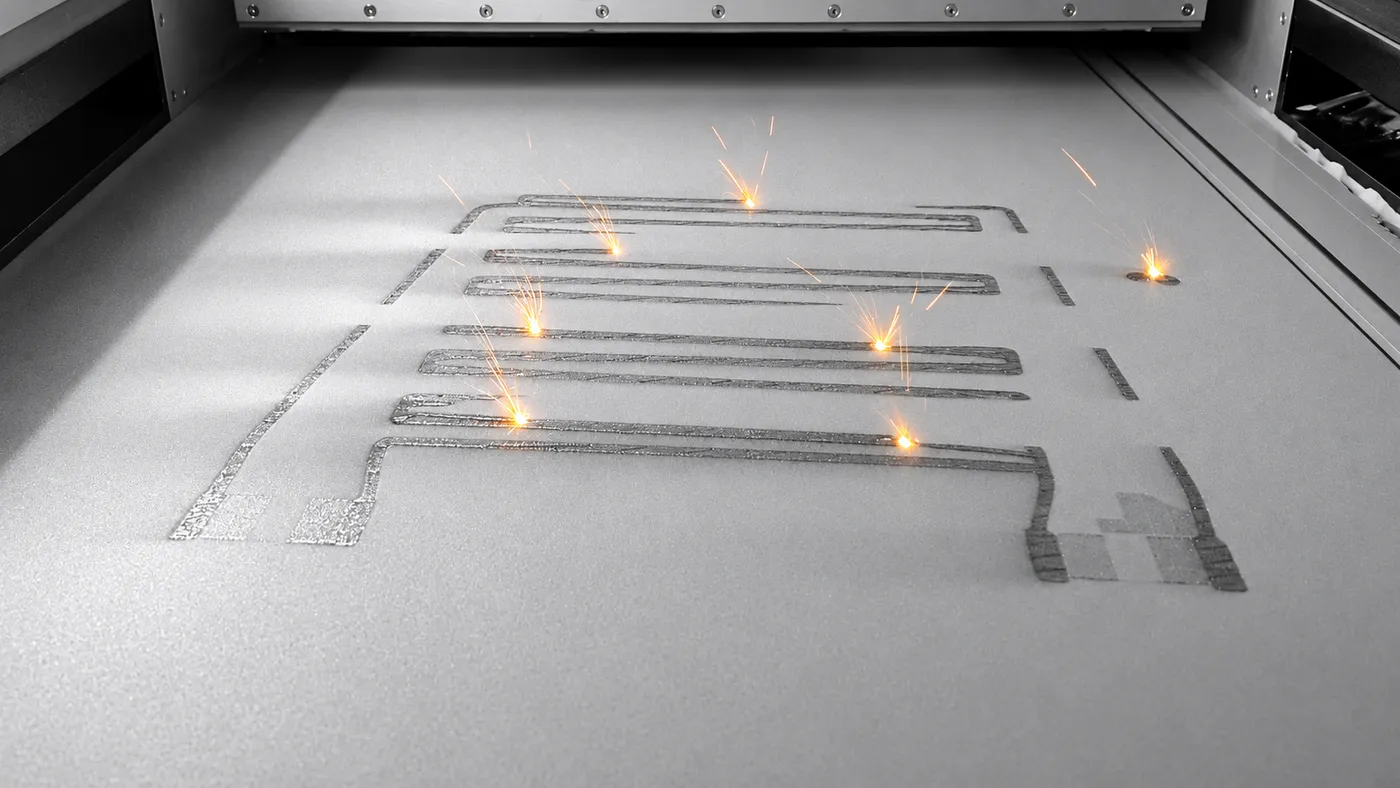
No tooling. Ever.
A stamped plate needs a die, and a new design needs a new die. Printing has none, so changing the geometry costs nothing.
No assembly.
A conventional core is 250 plates brazed together. Ours is one part, and it leaves the machine finished.
Built at a size almost nobody can print.
Large-format metal printing at this scale exists on a handful of machines in the world. We have standing access to them.
Printable. Not just designable.
Flux applies the build rules while it draws. Overhangs, powder drainage, support. What comes out is manufacturable by construction.
Send us a duty point
We will respond with a feasibility report.
Would rather talk through it? Contact Us.